
What is the Role of AI in Automating Regression Testing?
Role of AI in Automating Regression Testing
Regression testing is a critical part of software development, ensuring that new changes do not break existing functionality. Traditionally, this process has been time-consuming and resource-intensive, requiring manual effort to run repetitive test cases. However, artificial intelligence (AI) has emerged as a game-changer in automating regression testing, making the process more efficient, accurate, and scalable. AI-powered tools help software teams optimize their testing strategies, reduce human intervention, and improve software quality.
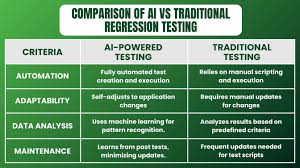
One of the most significant contributions of AI in regression testing is its ability to analyze vast amounts of test data quickly. Traditional testing methods often involve running a fixed set of test cases, but AI can intelligently prioritize tests based on risk, code changes, and historical failures. By identifying high-risk areas in the software, AI-driven regression testing ensures that critical functionalities are tested more thoroughly, reducing the chances of bugs slipping into production. This smart prioritization helps development teams save time and focus on the most impactful tests.
Another major advantage of Al regression testing for voice agents in automating regression testing is its ability to generate and maintain test scripts dynamically. In traditional automation, test scripts must be manually created and updated whenever there are changes in the application. This process can be cumbersome and error-prone. AI-powered tools can automatically detect changes in the code and adjust test scripts accordingly, reducing the need for manual intervention. This makes regression testing more adaptive and ensures that test scripts remain relevant as the software evolves.
What is the Role of AI in Automating Regression Testing?
AI also enhances test execution efficiency by leveraging machine learning algorithms to predict failures. By analyzing past test results and patterns, AI can identify which test cases are most likely to fail and focus on them first. This predictive capability helps teams catch defects earlier in the development cycle, improving overall software reliability. Additionally, AI-driven test automation tools can execute tests in parallel across multiple environments, significantly reducing testing time and accelerating the release process.
Flaky tests, which produce inconsistent results due to external factors like network issues or environmental changes, are a common challenge in regression testing. AI can help identify and mitigate flaky tests by analyzing test execution patterns and pinpointing unreliable test cases. This ensures that test results are more stable and reliable, allowing teams to make confident decisions based on accurate test data. By reducing false positives and negatives, AI improves the effectiveness of automated regression testing.
Another critical role of AI in regression testing is in visual testing, where AI-driven tools can detect UI changes and anomalies that might go unnoticed in traditional testing. Visual testing ensures that user interface updates do not unintentionally break design consistency. AI-powered visual testing tools use image recognition and deep learning techniques to compare UI elements across different versions, highlighting discrepancies and preventing visual defects from reaching end users.
AI’s impact on regression testing extends beyond just automation; it also enhances test reporting and analytics. AI-driven dashboards provide insightful test metrics, highlighting trends, failure patterns, and areas of improvement. These analytics help teams make data-driven decisions, optimize testing strategies, and continuously improve software quality. By providing actionable insights, AI ensures that regression testing becomes a strategic asset rather than a routine task.
As AI continues to evolve, its role in regression testing will become even more significant. Organizations adopting AI-driven testing solutions can achieve higher efficiency, lower costs, and improved software quality. While AI cannot completely replace human testers, it complements their efforts by handling repetitive tasks and allowing them to focus on more complex testing scenarios. By integrating AI into regression testing, software teams can enhance their testing capabilities, accelerate development cycles, and deliver robust applications with greater confidence.