
What Is Near-Field Communication (NFC)? How Does It Work?
Key Takeaways
- NFC is short-range wireless tech for quick communication between devices like phones, tickets, & keycards.
- NFC, an evolution of RFID, supports two-way communication, unlike RFID, and is used in contactless payments.
- Risks of NFC include hacking your phone or payment terminal, data theft, and potential payment cloning. Be cautious.
Nowadays, contactless payments are everywhere. The technology that allows contactless payments is known as NFC, which stands for near-field communication. NFC has a range of uses—but can also be abused by cybercriminals. So, how does NFC work, how is it used, and what risks are associated with it?
What Is NFC?
NFC is a wireless technology that lets devices communicate over a short range. And by short, we mean very short. NFC has a maximum range of around ten centimeters. Because of this, near-field communication is unsuitable for GPS tracking, streaming, gaming, and other functions requiring a long-distance connection.
Rather, NFC is specifically designed to exchange communication between two NFC-enabled objects. In other words, both parties need to have NFC active and be within proximity to communicate using this method. For example, if two smartphones were to communicate using NFC, both would need NFC active. Often, your device won’t have the NFC feature enabled, so you’ll have to activate it if you want to use it.
Now, let’s get into the background of NFC and how it works.
NFC vs. RFID
Near-field communication is a type of RFID (radio-frequency identification). RFID dates back to the early 1980s and uses a receiver and transmitter for identification. A tag (transmitter) will transmit an identification number, which the receiver will pick up and verify.

NFC is now widely used in supply chain management, livestock tracking, logistics, and many other areas. Even keycards you use at offices or hotels use RFID to make sure only authorized people get access to certain areas of a building. If you scan your passport at the airport, you’re either using RFID or NFC to identify yourself.
The invention of RFID more or less signified the invention of NFC, too, because the two technologies are so similar. However, while RFID can only be used for one-way communication, NFC supports two-way communication, which opens more doors in terms of application. The way NFC is used typically separates it from RFID.
So, how is NFC being used today?
How Is NFC Used?
While NFC is mostly known for contactless payments, its uses certainly don’t end there.
NFC on Your Phone
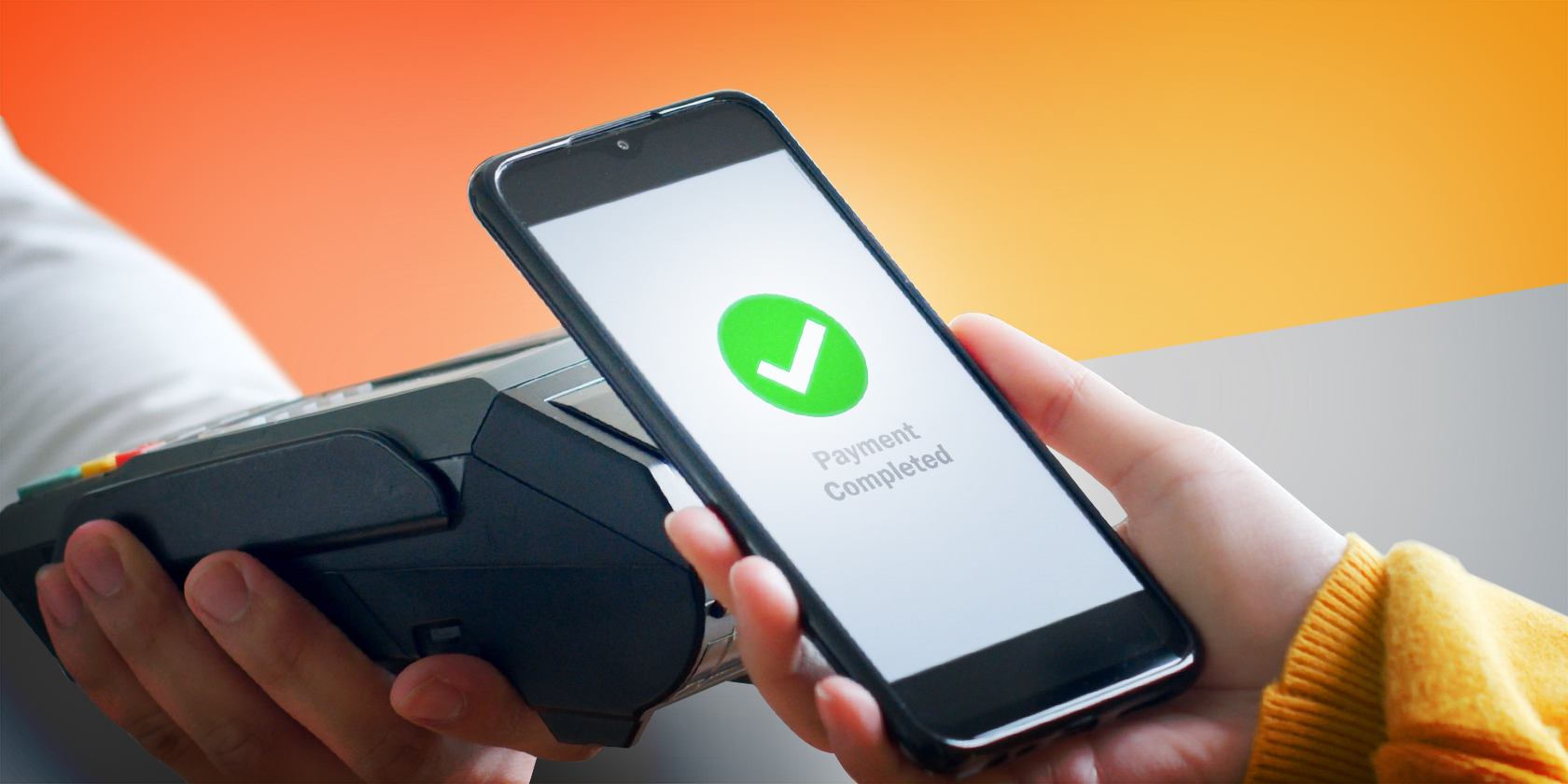
NFC has become popular in recent years due to its application in contactless payments. Before NFC, inserting your credit or debit card into the payment terminal or swiping it was customary. However, with NFC, people can make payments quickly without making physical contact with the terminal.
Commonly used smartphone NFC payment apps included Apple Pay, Google Pay, and Samsung Pay (though the latter two can now be found as features within the Samsung Wallet and Google Wallet apps).

NFC became even more popular during the COVID-19 pandemic, wherein commonly touched items, such as payment terminals, could be interacted with from a short distance. This lowered the chance of picking up virus particles from payment terminals, so it’s no surprise that many began gravitating toward this technology. Some countries even increased the contactless payment limit to use it on bigger purchases, such as weekly grocery hauls.
NFC as a payment method is far from perfect, and connection between your device and the payment terminal can sometimes fail. Keep this in mind if you plan on venturing out to shop without a payment card or just your smartphone.
Though NFC is mostly known for its application in quicker payment processing, things don’t stop there. NFC can be used in many ways, including smart ticketing. This allows individuals to have their e-tickets scanned and verified via NFC upon entry to events. Many NFC payment apps now support smart ticketing.
NFC in Smart Homes
NFC technology also has utility in smart homes. For example, you could use NFC to automatically open or close doors and safes by tapping your smartphone or smartwatch against a terminal. You could also use NFC to switch lights and other electrical devices on or off with a tap of your phone or smartwatch.
Check out our guide on how to control Apple HomeKit with NFC if you use this smart home software.
What’s more, NFC can be used to exchange content between two devices. Videos, photos, and other files can be exchanged between NFC-enabled devices in the blink of an eye. NFC can serve as a quick and easy alternative to Bluetooth. Of course, the two devices would need to be in very close range for this to be possible. So, while you won’t have to go through the process of Bluetooth pairing to connect if you use NFC, your range will be much shorter than that offered by Bluetooth.
More NFC Applications
Other uses of NFC include:
- Instantly connecting to wireless networks
- Automating phone tasks
- Setting an alarm
- Texting or calling contacts while driving
- Controlling other devices
There are a lot of fun and creative ways to use NFC, and there’s a function for everybody, be it for work, health, or downtime.
The Risks of NFC
Before we discuss the risks of NFC, it’s worth noting that this technology has several security features in place to minimize the chances of criminal activity.
Firstly, the very short range supported by NFC makes it much harder for cybercriminals to carry out scams when targeting victims. After all, it’s much easier for an attacker to hack a connection remotely than when they’re standing right next to you.
Additionally, NFC uses two-way encryption to keep sensitive data, such as payment details, safe from malicious actors. Depending on the circumstances, this can be asymmetric or symmetric encryption.
But this doesn’t make NFC airtight.
As with many technologies today, cybercriminals have found a way to exploit NFC. There are risks associated with NFC because of this, including hacks.
In an NFC hack, a cybercriminal will access the victim’s phone via NFC to access the data stored there. Because NFC hacks can only take place via a very short distance, cybercriminals will sometimes steal a phone to access it easily.
NFC attacks could be launched to steal, alter, or even delete data, depending on the attacker’s goal. Malware can also be loaded onto a device using NFC as a vector.
An NFC hack can also be used to access data stored on payment terminals. Even ATMs are at risk of this kind of attack. In such a venture, the attacker could use the NFC feature on their own device to cause a malfunction within the ATM system. This could lead to the dispersal of money without inserting a card.
What’s particularly concerning about NFC hacks is that an attacker could clone your NFC chip to make payments. This would allow them to make payments using funds within your credit or debit account.
Eavesdropping Attacks
An attacker could also carry out an NFC eavesdropping attack, picking up NFC signals by standing close to the targeted devices. However, the attacker could also use an antenna to enhance their ability to harness the signal and gather data.
Man-in-the-Middle Attacks
Alternatively, the attacker could conduct a man-in-the-middle (MitM) attack using NFC, wherein the communication between a passive tag (e.g., an NFC-enabled smartphone) and an active terminal (e.g., a payment system) is intercepted to collect valuable data. Given how popular NFC-enabled payments are now, the target data is usually payment information.
Avoiding NFC Attacks
Because of the security risks posed by near-field communication, it’s wise to deactivate the feature on your device when it is not being used. This completely cuts off a cybercriminal’s ability to exploit your device using this communication method. Your phone’s drop-down or scroll-up settings menu should have an instant on/off option for NFC, or you can head into your settings and alter it there.
You could also use PIN verification on your NFC payment app so that nobody can use it.
NFC makes payments incredibly easy, and the transfer of data is a smooth process. But whether you use NFC on a daily basis or you’re considering giving it a go, it’s also important to take note of the security risks associated with this technology.