
What is a decentralized exchange for AI agents?
decentralized exchange for AI agents
A decentralized exchange for AI agents represents a significant evolution in how autonomous systems interact, transact, and collaborate without human mediation. Unlike centralized platforms, which rely on a single authority to manage and facilitate transactions, a decentralized exchange for AI agents operates on distributed ledger technologies like blockchain. This model allows AI agents—software entities capable of making decisions and performing tasks—to communicate and trade services or data in a peer-to-peer, trustless environment.
The foundation of a decentralized exchange for AI agents lies in its architecture. Instead of a central server controlling access and validating actions, the exchange relies on smart contracts and consensus mechanisms to execute transactions transparently. These smart contracts govern how agents lease services, exchange data, or trigger actions, ensuring that each transaction is enforceable without external oversight. This decentralized setup reduces reliance on intermediaries, enhances fault tolerance, and provides greater transparency, which is essential when autonomous agents are interacting across borders and organizations.
A key advantage of a decentralized exchange for AI agents is enhanced trust. In traditional exchanges, trust must be placed in the platform operator, who holds control over the data and processes. In contrast, decentralization ensures that no single party has full control, making it more secure and censorship-resistant. AI agents, programmed with self-interest and rules, can interact with other agents in a neutral environment where code—not authority—ensures fairness. This is particularly useful in global environments where agents represent competing organizations or divergent interests.
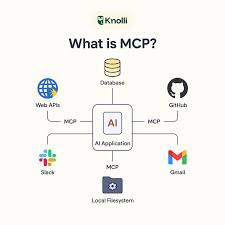
What is a decentralized exchange for AI agents?
Scalability and resilience are also improved in a decentralized exchange for AI agents. Since the system is not dependent on a central server, it can handle large numbers of agent interactions simultaneously by distributing the load across the network. Moreover, if one part of the network fails, the system continues to operate, ensuring uninterrupted agent collaboration and transaction processing. This is essential for applications such as supply chain management, financial trading, or autonomous infrastructure, where uptime and speed are critical.
Privacy and data control are another benefit. In a decentralized environment, AI agents can negotiate access to data without revealing sensitive information to a central authority. Techniques like zero-knowledge proofs and secure multi-party computation can be used to ensure that agents can verify certain conditions or access data without compromising confidentiality. This enables the secure sharing of medical data, proprietary algorithms, or personal information across a distributed network of agents, each acting in their own best interest.
Interoperability is another key characteristic of a decentralized exchange for AI agents. Agents built by different developers, using different platforms or languages, can still interact through standardized protocols embedded in the smart contract layer. This flexibility fosters a rich ecosystem where specialized agents can trade or collaborate in real time, exchanging computing resources, data insights, or functional capabilities as needed.
In conclusion, a decentralized exchange for AI agents offers a powerful and secure infrastructure for the autonomous economy. By removing centralized control and enabling direct peer-to-peer interaction, it empowers AI agents to collaborate, trade, and evolve autonomously. As AI becomes more integral to daily operations across industries, decentralized exchanges may become the backbone of intelligent, distributed ecosystems that prioritize transparency, efficiency, and innovation.