
How does PCB manufacturing integrate with assembly processes?
PCB manufacturing integrate with assembly processes
The integration of PCB (Printed Circuit Board) manufacturing with assembly processes is a crucial aspect of the electronics production industry. This synergy is essential for producing reliable and efficient electronic devices. By aligning manufacturing and assembly, companies can streamline their operations, reduce costs, and enhance the quality of the final product. Understanding how these two processes interconnect can provide valuable insights into the overall production workflow of PCBs.
The transition from PCB manufacturing to assembly is designed to be seamless, minimizing delays and ensuring that the production process flows smoothly. Once a PCB is fabricated, it typically undergoes various testing stages to verify its functionality and integrity. This includes electrical testing to ensure that all connections and traces are intact. Upon passing these tests, the PCB moves directly to the assembly line, where components are affixed to the board. This integrated approach reduces the time between production and assembly, helping manufacturers meet tight deadlines and respond quickly to market demands.
During the pcb manufacturing phase, designers must consider how the board will be assembled. This involves selecting component placements and layouts that facilitate efficient assembly. For instance, the use of surface-mount technology (SMT) allows for the placement of components directly onto the surface of the PCB, which can significantly reduce assembly time and increase component density. By collaborating closely with assembly teams during the design phase, manufacturers can create PCBs that are easier and faster to assemble, ultimately improving overall production efficiency.
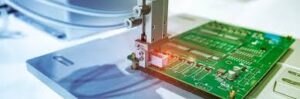
How does PCB manufacturing integrate with assembly processes?
The integration of PCB manufacturing and assembly also extends to supply chain management. Effective sourcing of components is essential for maintaining a consistent flow of materials necessary for assembly. Manufacturers often collaborate with suppliers to ensure that high-quality components are readily available when needed. This relationship helps prevent delays in assembly due to component shortages and ensures that the PCBs can be populated with the required parts as soon as they are manufactured. A well-coordinated supply chain also allows for bulk purchasing, which can lead to cost savings for the manufacturer.
Advancements in automation technology have significantly enhanced the integration of PCB manufacturing and assembly processes. Automated machinery, such as pick-and-place machines, can quickly and accurately position components on the PCB, reducing the risk of human error and speeding up the assembly process. Similarly, automated optical inspection (AOI) systems are used to check for defects in both the manufactured PCBs and the assembled boards. The use of automation not only increases efficiency but also improves the overall quality of the final product by ensuring that each step in the process is executed with precision.
Quality control is a critical aspect of integrating PCB manufacturing with assembly processes. Manufacturers implement stringent quality assurance measures at each stage to ensure that both the PCBs and the assembled products meet industry standards. Regular inspections, testing, and validation checks are conducted throughout the production workflow. By maintaining a continuous focus on quality, manufacturers can identify and rectify issues early, reducing the likelihood of defects in the final product. This commitment to quality ultimately leads to greater customer satisfaction and reduced warranty claims.
In conclusion, the integration of PCB manufacturing with assembly processes is essential for producing high-quality electronic devices efficiently. By ensuring a seamless transition between manufacturing and assembly, considering design implications, managing the supply chain effectively, leveraging automation, and maintaining stringent quality control measures, manufacturers can enhance their production workflows. This synergy not only improves operational efficiency but also results in more reliable and cost-effective electronic products. As technology continues to evolve, the integration of these processes will become increasingly important, enabling manufacturers to keep pace with the growing demands of the electronics market.